Overview
Candy Crush Friends’ seasonal events drove strong revenue, but they came at a cost. The old format required expensive 3D worlds and months of lead time, leaving power players bored, casual players feeling pressured to pay, and the whole team burned out.
I led the redesign, replacing it with a lightweight daily-level format that cut production time by 50% and lifted DAU by 2.5%. It was the team’s most successful feature to date.
Candy Crush Friends
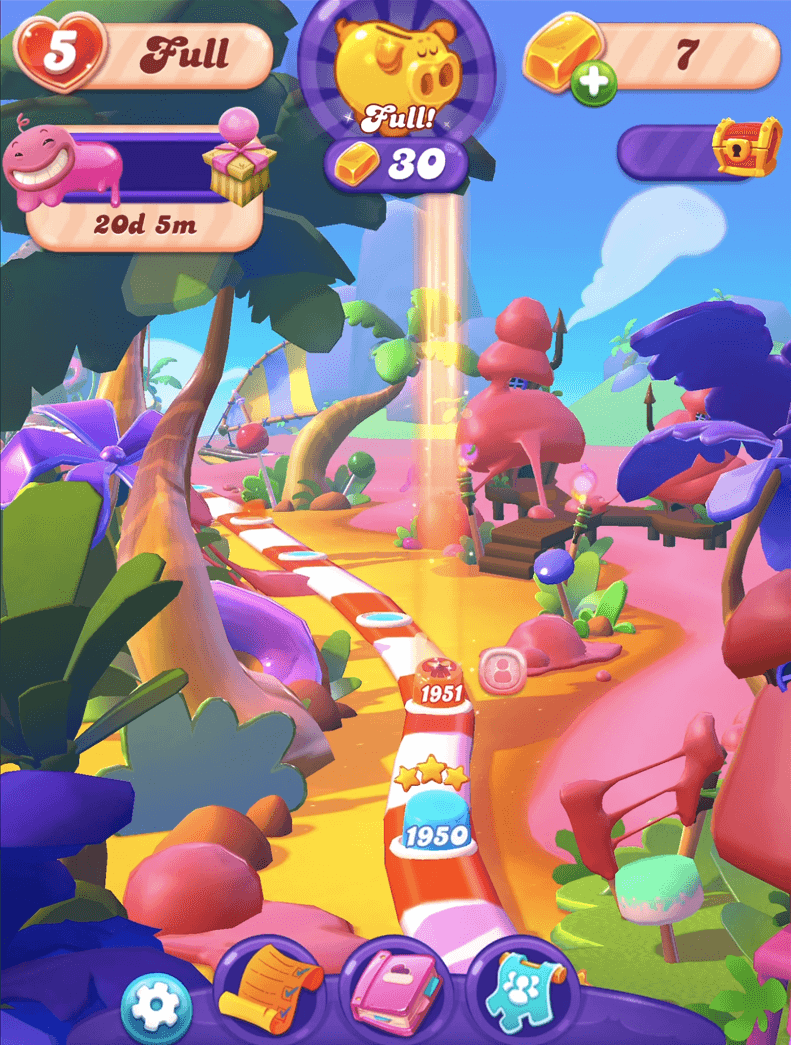


Candy Crush Friends, saga, pre-level and in-game
My role
I covered two roles simultaneously during my time on Candy Crush Friend: UX designer and UX/UI lead.
UX Designer: Communicate mechanics, page layout and flows. Work with artists and engineers to maintain communication and usability as the wireframes are converted to full in-game art. Prepare and conduct user research.
UX/UI Lead: Identify problems and opportunities, define ways of working, build trust and communication between UX/UI and other departments, and coach and support other designers.
Understand the problem
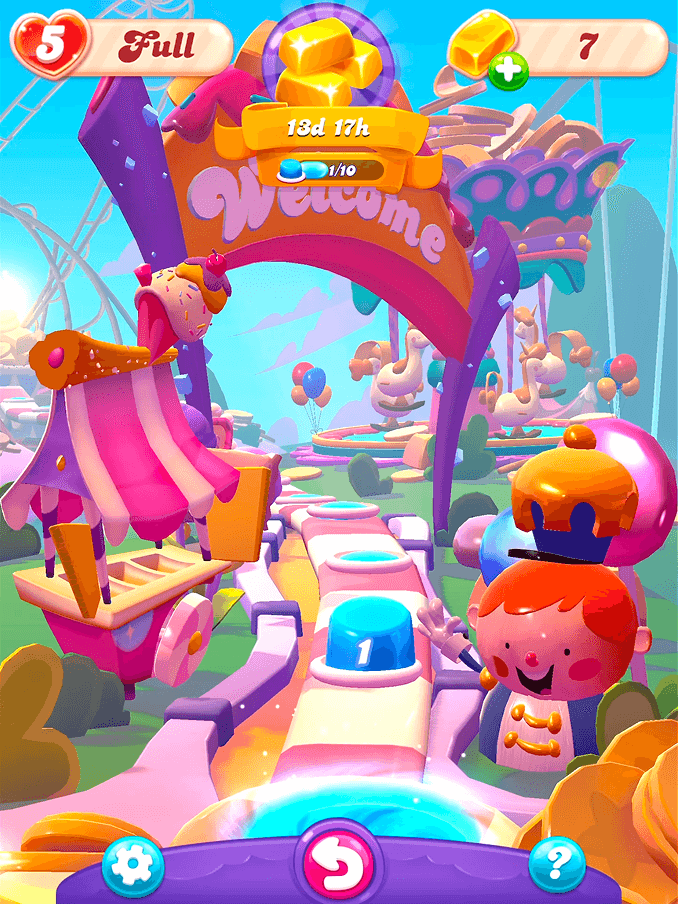
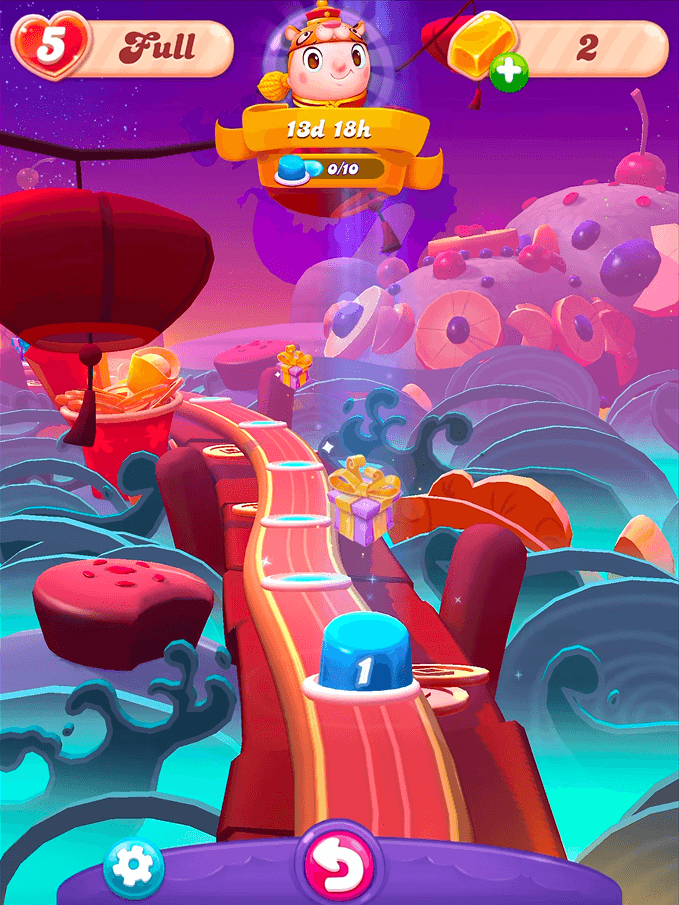
Placeholder - Research collage.
How events worked before
Events were large 3D worlds separate from the main games, featuring 15 to 30 bespoke levels. They required concept artists, character designers, animators, engineers, and level designers.
Events needed about two months of lead time, leaving no room for other events in the schedule and little room for error.
What it cost the players
While at King, I built a qualitative user research programme from scratch. We spoke with users every two weeks. These sessions gave them time to discuss their experience in the game, and events often came up. Players felt obliged to grind through event levels for rewards, fearing they'd miss out, then return to the main game drained.
Our power players completed an event in just a couple of sessions, giving them little reason to return the next day. These were our most valuable players.
Others felt pressured to pay to get past levels and claim rewards.
Events generated revenue but left a bad taste. This was reflected in steadily declining DAU.
What it cost the team
The events were heavily focused on art and required long lead times, leaving no flexibility to respond to cultural events and no room for error.
Alongside this, level designers had to carefully balance the levels they created, making later levels more challenging without making them so difficult that newer players couldn't complete them. This required ongoing adjustments throughout each event. This left the team burned out by the seemingly endless grind of creating events throughout the year.
Why events were still worth fixing
Events remained important to the business and its players. They brought lapsed players back, gave new players an entry point, and kept current players engaged. They made the game feel alive and cared for while generating strong revenue.
The problem was the format, not the idea.
The real problem
The ask was to increase DAU and game rounds while the feature was live. The real problem was how to bring players back every day without burning out players or the team. The event had to perform well and cost less to produce.
Zoom out
Research: don’t reinvent the wheel

Screenshot of previous event
I looked inside King, across the games industry, and outside it to see how others might have already solved the problem.
Many products get people back daily, but nearly all of them let you log in, collect, and leave. How could we combine the idea of a daily reward with a "daily level"? What would that look like in the game?
Time for a workshop!
Team workshop

Workshop explorations
I designed an ideation workshop where art, design, engineering and production could use their unique skills and perspectives to explore the idea of a daily level with a low art cost. Where would it fit in the game, and what would it look like?
Move forward
Early explorations and user test


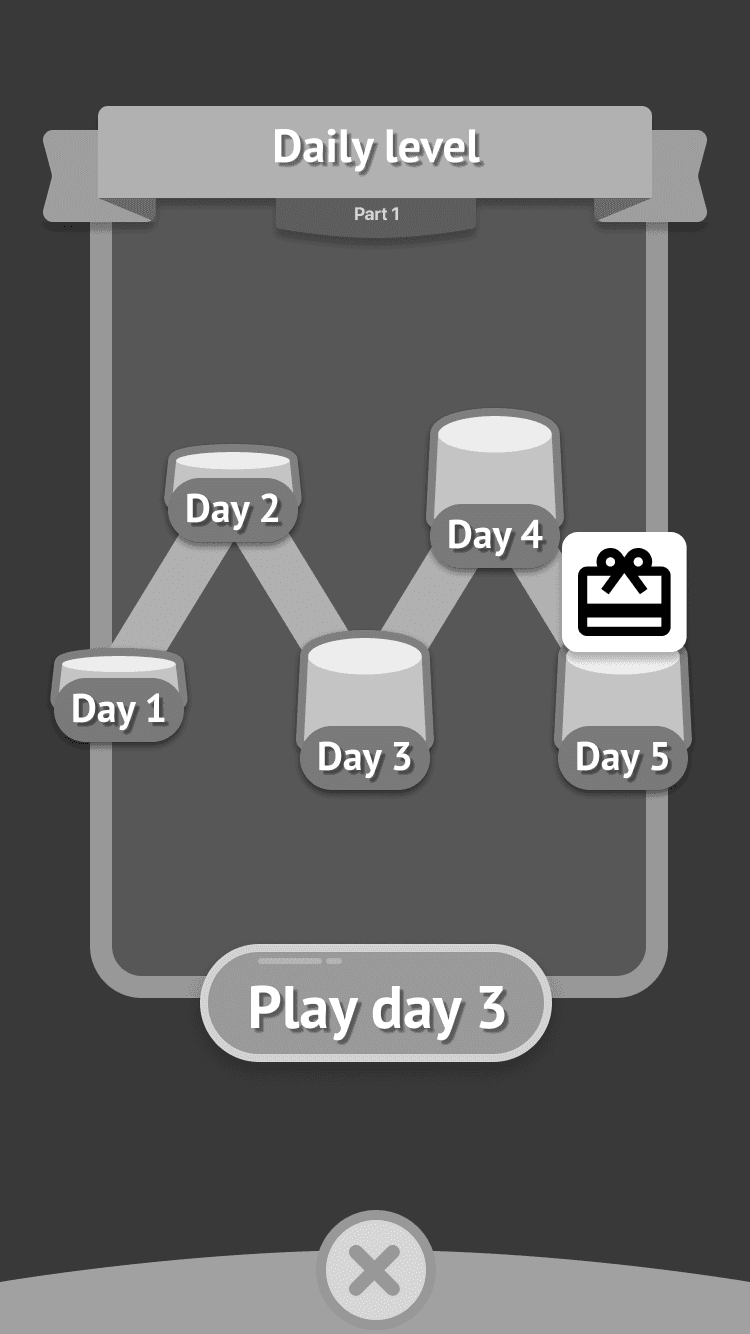
Wireframes based on ideation workshop

Art concepts presented to players, based on the wireframes above
I gathered the explorations and worked with the art team to create three distinct concepts to test with users.
I wanted one very lightweight option that required almost no explanation and was the simplest to build. At the other end, I wanted something that still hinted at the Saga, part of the Candy Crush franchise’s DNA, with a concept somewhere in between.
I planned and prepared the user research sessions and wrote the discussion guide. The focus was on understanding how users would respond to a simpler experience rather than a full 3D world, with one level a day, and what they would expect that to look like.
Players were drawn to the scrapbook idea. It was clear that there was a daily level as well as a path to a reward, which was their main driver for playing events.
The main questions concerned mechanics and rewards. After further exploration, I ran a second user test focused on the mechanic. The results weren’t definitive. Players understood the states and system, but they weren’t immediately obvious to everyone. We didn’t have enough time to test again before launch.

Concepts for testing the mechanics.
Building the experience

Using sticky notes to map out the event flow.

Slowly, sketches were replaced with finished screens.
UX was seen as a bottleneck. I wanted to move away from the idea that designers disappeared for weeks before returning with a big "tada" moment. The team didn't need to know every detail before getting started. By mapping the flow with sketches on stickies, the engineers could begin working. What they discovered along the way could then feed back into the design.
As more of the experience took shape, I replaced the sketches with higher-fidelity screens. That way, the whole team could see where we stood.
Results

The event in-game
DAU increase
Daily Active Users increased by 2.5% while the event was live, making it the most successful feature the team had shipped. The event format gave players an achievable goal, and the reward for winning the level set them up for success throughout the rest of their session. Additionally, power users were not burning through all the levels in just a few sessions, giving them more reason to return daily throughout the event.
Development time decrease


The event was re-skinned for Spring and Summer events
Production time for the event was 50% shorter than that of similar previous events and required a much smaller team. Because the technical setup was already in place, it was easy to reskin the event for different seasons and occasions, dramatically reducing development time.
Trust in design
This built trust in the design team. Designers went from implementing handed-down features to owning the process from problem through solution.